Storm recovery · Boca Raton, FL
Storm Damage Cleanup in Boca Raton
Storm damage in South Florida rarely comes as one problem. A torn roof lets rain into the attic; a broken lanai screen dumps water against the house; wind-driven rain finds every gap in every window seal. Storm cleanup is about bringing order to that mess quickly — clearing what's dangerous, protecting the building from the next rain, and starting the drying and repair chain in the right order.
The first hours after the storm
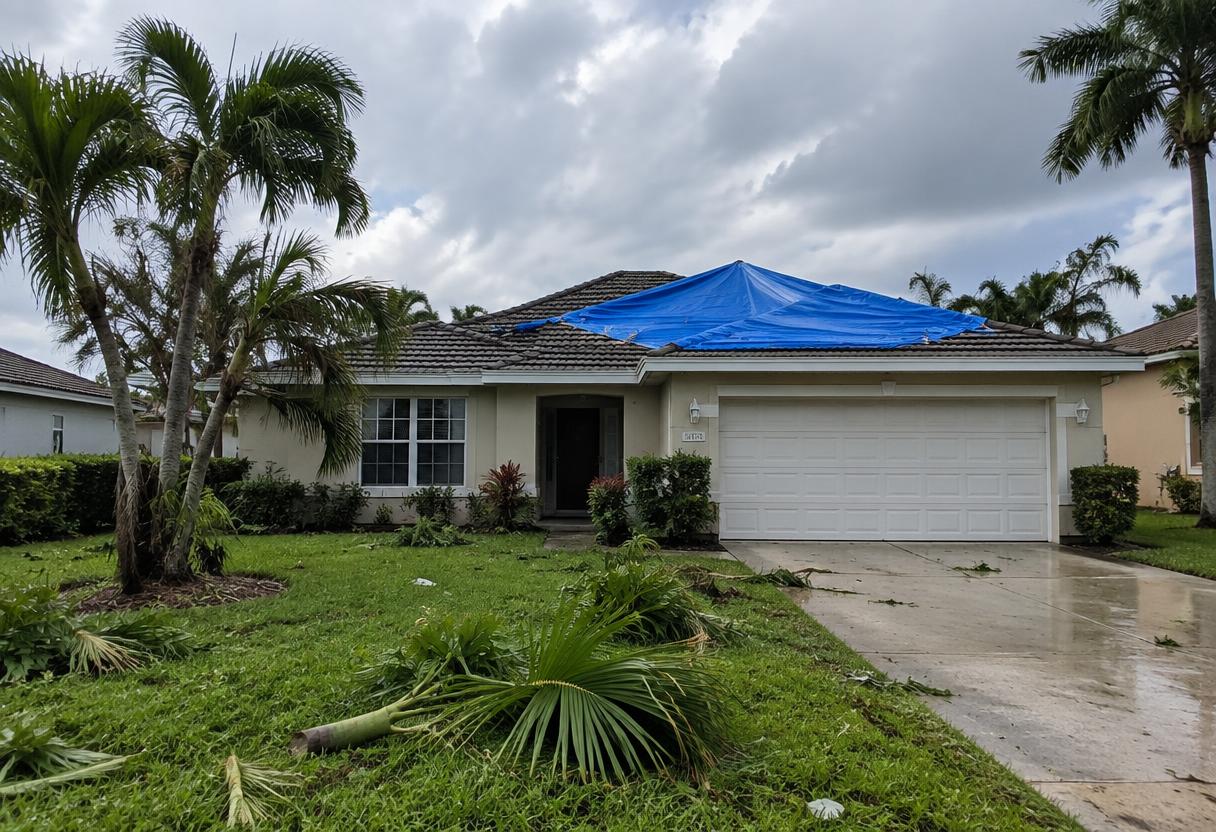
Safety comes before cleanup: downed power lines, damaged structures and standing water don't mix, and no debris pile is worth an injury. Once it's safe, the priority is stopping further damage — temporary covers over roof and window openings, water extraction where rain got in, and moving belongings out of wet areas before they're ruined for good.
Photograph everything before moving or discarding anything you can help. Insurance documentation is far easier when the damage is recorded as found, and the photos cost nothing to take while the debris is still where the storm left it.
Cleanup to recovery
Once the building is protected and documented, cleanup follows: debris removed, wet materials extracted and torn out where they can't dry, and the structure dried with the same measured process we use on any water job — because wind-driven rain inside a wall is water damage, whatever the weather report says.
Then the repair plan comes together: what gets dried and kept, what gets replaced, and how the reconstruction phases run. Storm seasons strain everyone's schedules, and a clear written plan — even one that takes days to start — beats a vague promise and a stalled project three weeks in.
Storm damage cleanup photos
All services →Storm damage cleanup photo
Photo coming soon
Storm damage cleanup photo
Photo coming soon
Storm damage cleanup photo
Photo coming soon
Homeowner questions
Should I wait for the insurance adjuster before cleanup starts?
Documentation first, then mitigation. Insurers expect you to prevent further damage — that's a duty under most policies — but they want the damage recorded as found. Photograph thoroughly before anything is moved, then start the protection and cleanup the property needs.
The roof is covered by a tarp — is that enough?
A properly secured tarp is the right emergency move, and temporary protection is part of what we handle. But tarps are a bridge, not a fix — the roof repair and any interior water damage still need real attention, and the sooner the interior drying starts, the less the total damage grows.
What storm damage is most commonly missed?
Water that traveled. Rain blown into soffits, attics and wall cavities keeps damaging long after the weather clears, and it rarely shows at the point of entry. A post-storm moisture check is one of the highest-value calls a homeowner can make.
Do you help with insurance documentation?
We document what we find — photos, readings, scope of damage and work performed — in the format insurers ask for. We don't negotiate or settle claims on your behalf, but good documentation is the strongest thing you can bring to your own claim.
Related services
Damage doesn't wait — neither should you
Call, or send the request form with a few details about what happened. We'll follow up about next steps.
Or email Estimates@bocahomeservices.com — every request lands in the same inbox.