
Drying · Boca Raton, FL
Structural Drying in Boca Raton
A room can look completely dry and still be rotting behind the baseboard. Structural drying is the discipline of getting hidden moisture out of building materials — wall cavities, subfloors, framing — and proving it's out with measurements rather than appearances. It's the step that separates a real restoration from a cleanup that leaves a mold problem scheduled for next season.
How professional drying works
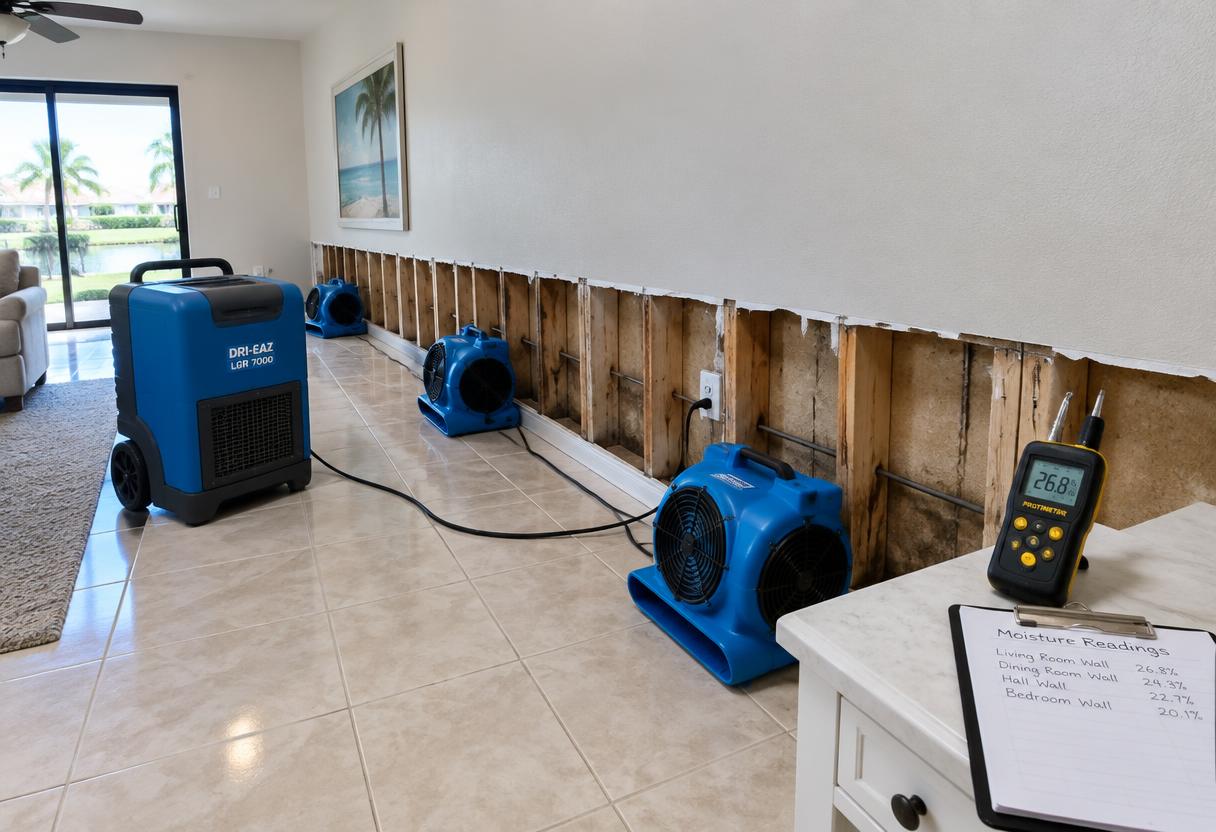
Drying is controlled evaporation: air movers lift moisture out of wet surfaces, dehumidifiers capture it from the air, and the wettest materials get targeted attention — baseboards removed to dry wall cavities, floor coverings pulled where subfloors are soaked, small access openings where moisture is trapped in the worst spots.
What makes it professional is the measurement. Moisture meters and thermal imaging establish what's wet, how wet, and where the water went; readings are tracked daily and the equipment layout is adjusted as materials dry. The job ends when readings reach dry standards for each material — documented, so you and your insurer can see the evidence.
Why South Florida makes it harder
Our climate fights drying. Humid outdoor air holds moisture the equipment then has to remove, and slab-on-grade construction means water can spread sideways across floors without anywhere obvious to show for it. Drying in Boca Raton means managing the indoor environment — sealed spaces, controlled air — rather than just opening windows and hoping.
Drying done slowly or partially is what feeds mold later, especially in our humidity. That's why we're firm about the boring parts: equipment runs continuously for days, doors to the work area stay closed, and nobody declares victory until the numbers say dry. It's also why we take baseline readings even in spaces that look fine — the materials next to the visible damage are often wetter than the damage itself.
Structural drying photos
All services →Structural drying photo
Photo coming soon
Structural drying photo
Photo coming soon
Structural drying photo
Photo coming soon
Homeowner questions
How long does structural drying take?
Most jobs run several days of continuous equipment operation; heavily soaked materials or slow-drying construction can take longer. We track readings daily and give you an honest picture of the trend — including when something isn't drying and needs a different approach.
Does everything need to be torn out to dry?
No — a big part of professional drying is saving what can be saved. Drywall can often dry in place with holes behind baseboards, framing dries once airflow reaches it, and hardwood floors sometimes have a chance with proper techniques. Materials that genuinely can't be saved, we remove — and show you why.
Can I run my air conditioner instead of drying equipment?
AC helps with comfort, but it isn't a drying system — it doesn't move air across wet surfaces or hold the space at the conditions professional dehumidifiers create. Drying equipment is sized to the specific space and moisture load; a house full of wet drywall overwhelms an AC quickly.
How do you know when it's actually dry?
Moisture readings against established dry standards for each material, taken at the same points each day until they stabilize. 'Looks dry' is where amateur restorations stop; measured dry is where we stop — and you get the documented readings.
Related services
Damage doesn't wait — neither should you
Call, or send the request form with a few details about what happened. We'll follow up about next steps.
Or email Estimates@bocahomeservices.com — every request lands in the same inbox.